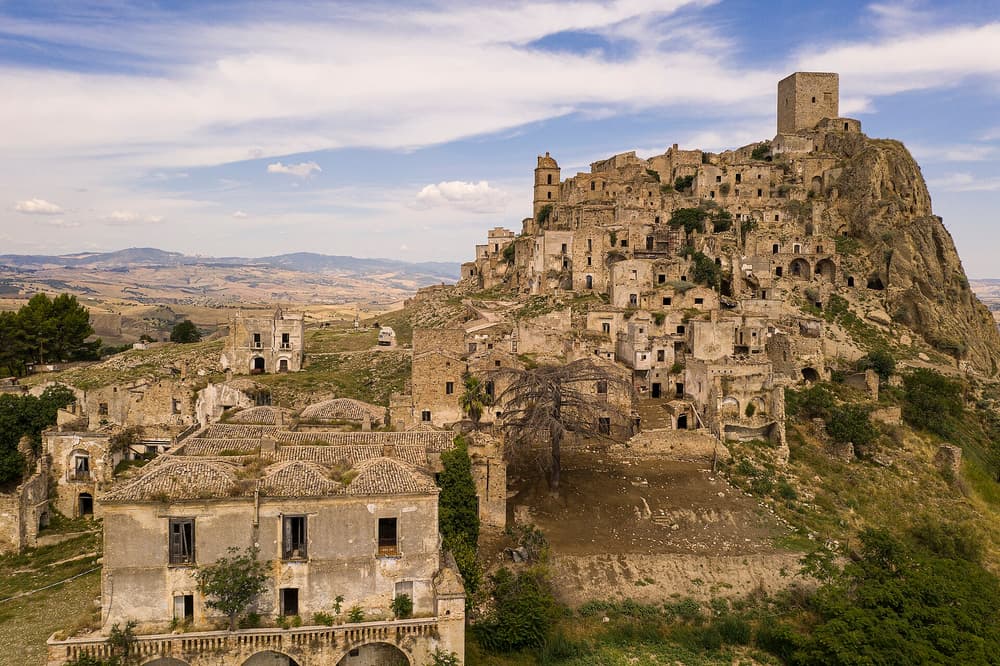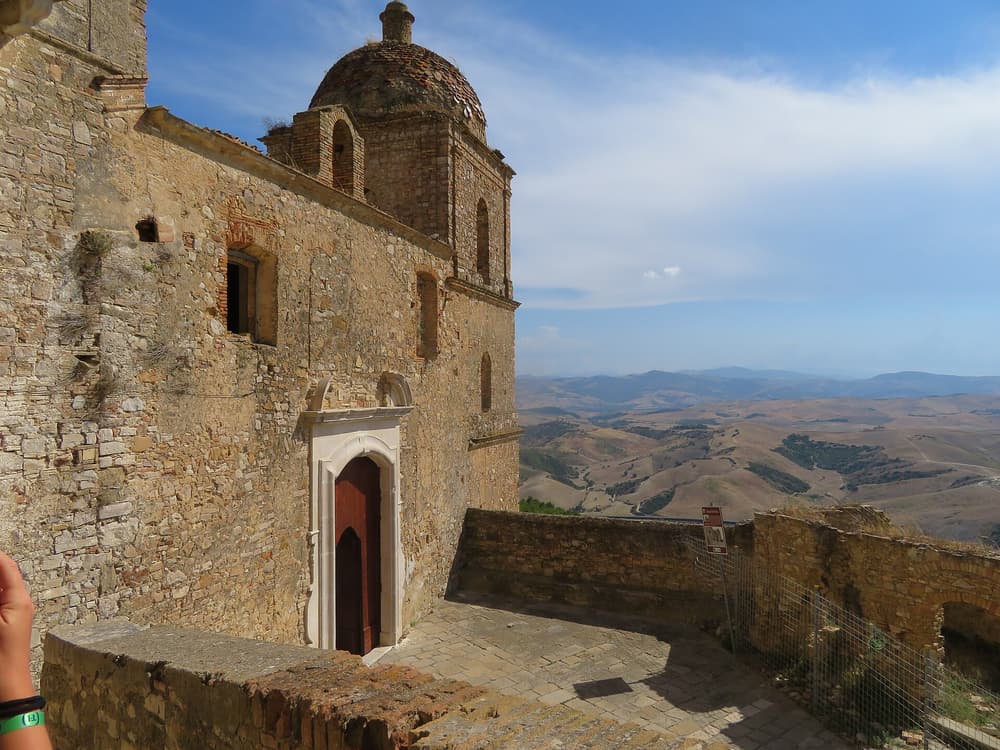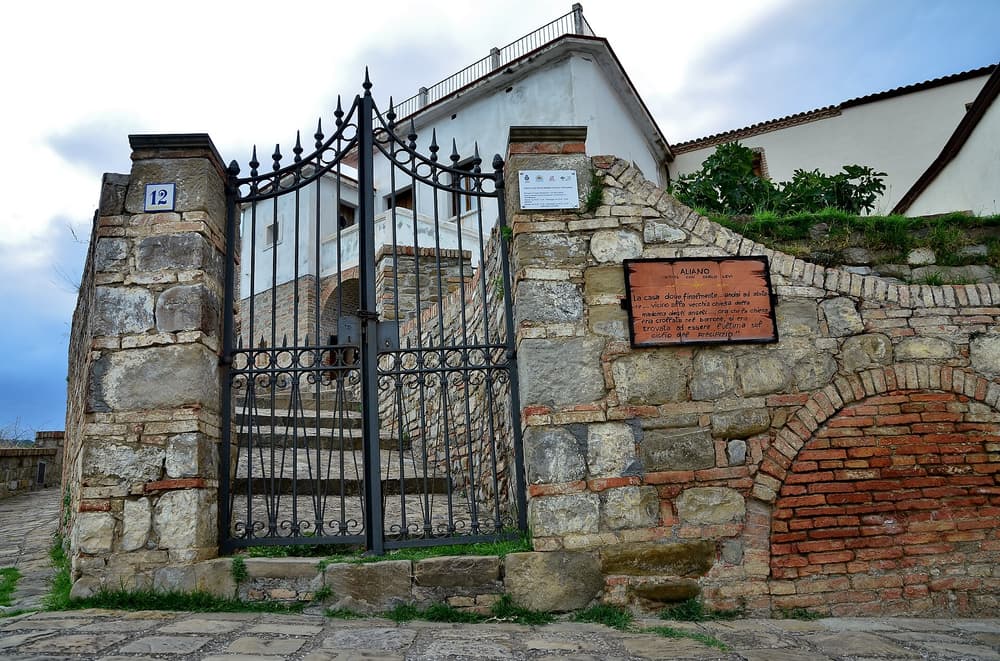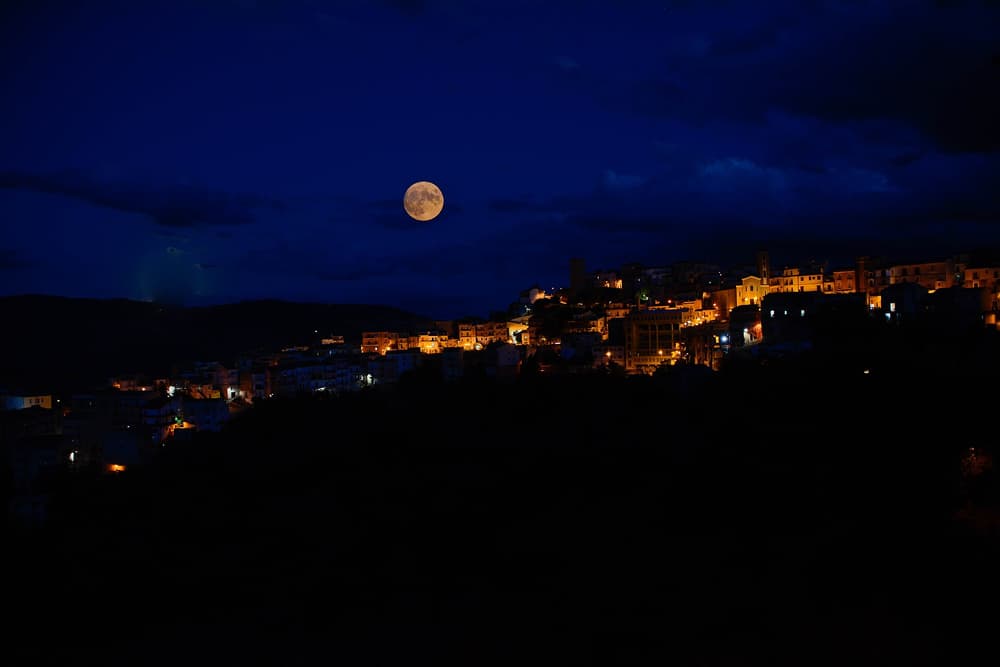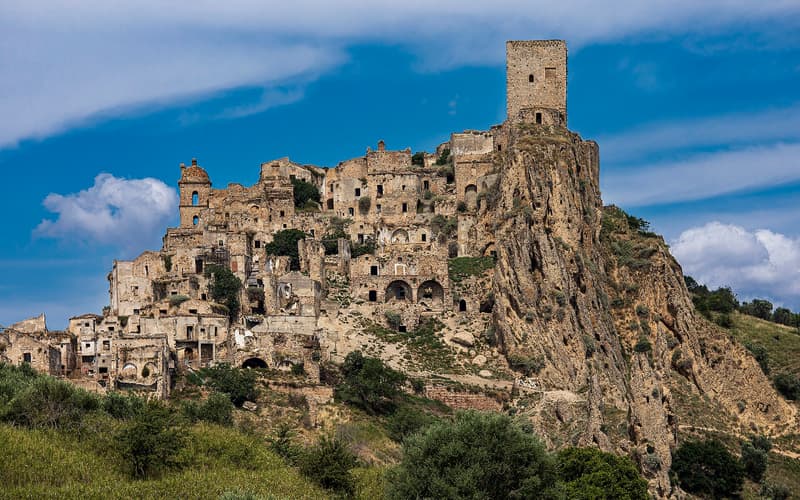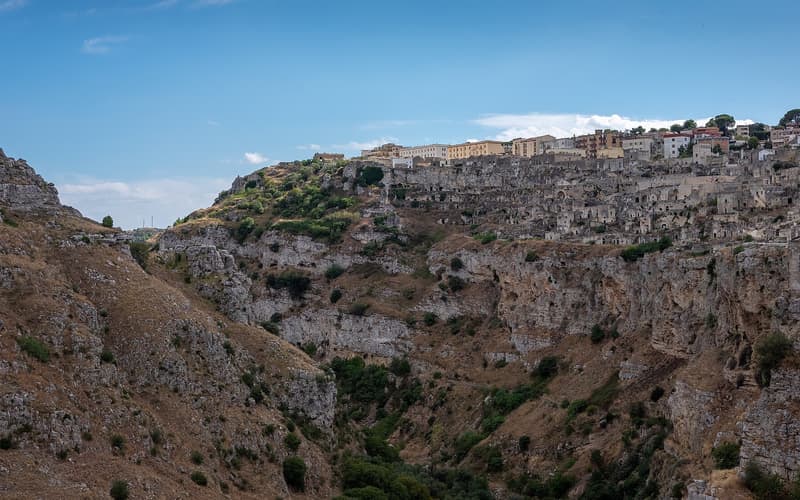
In 1935–36 the painter and writer Carlo Levi was sent into political exile in Aliano, a remote village above deep-eroded clay hills. His book Christ Stopped at Eboli, in which the village appears as “Gagliano”, made southern rural poverty known across Italy and the world. Levi chose to be buried here, and the village keeps his house, a museum and a literary park.
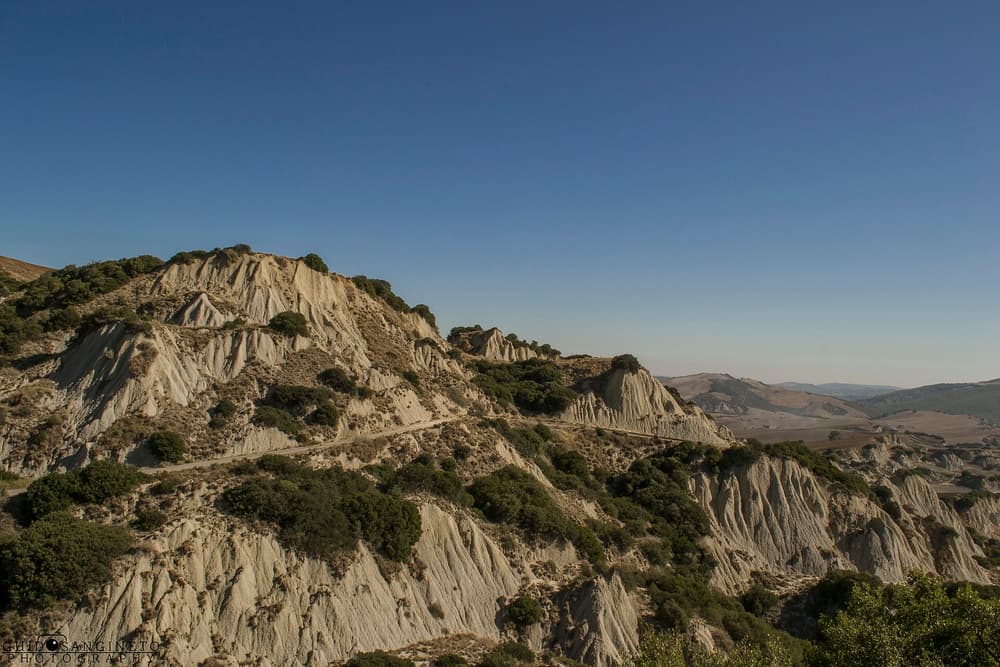
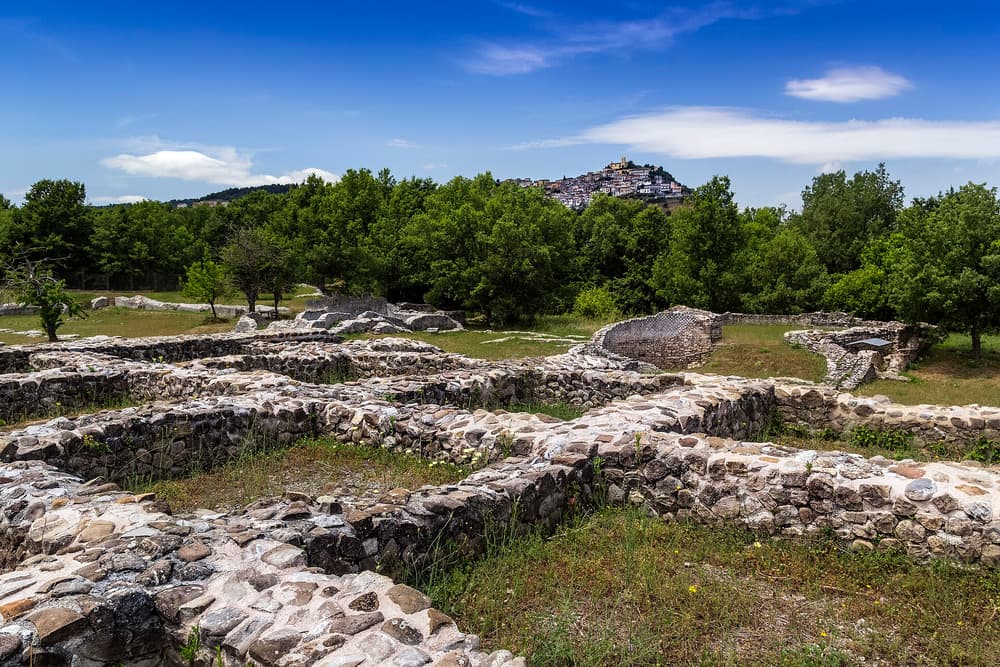
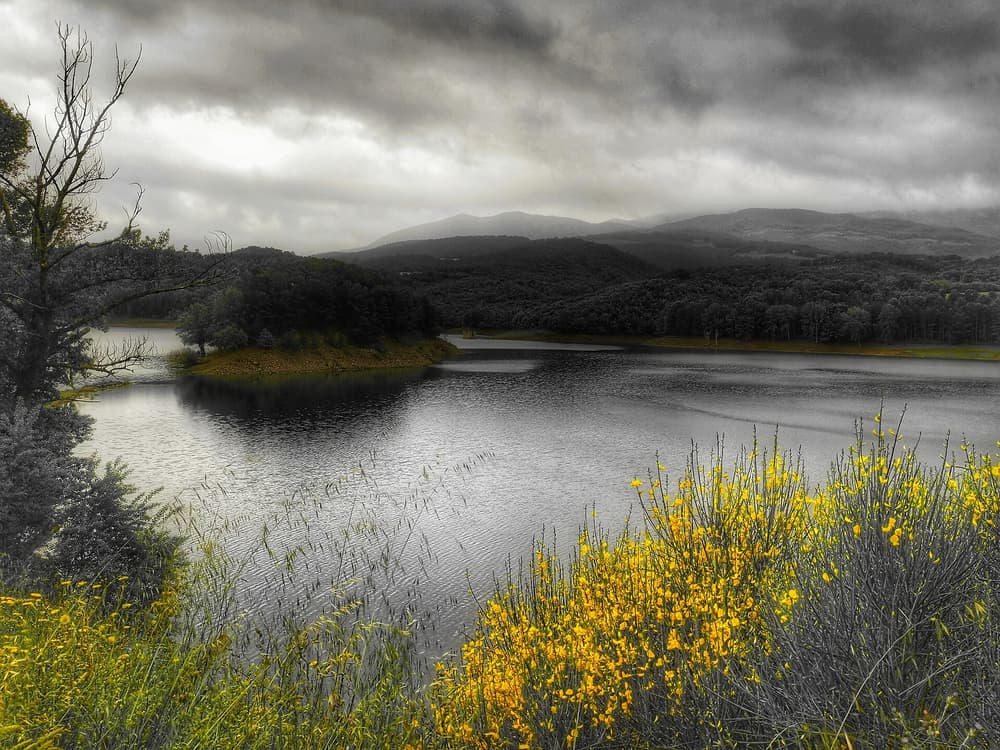
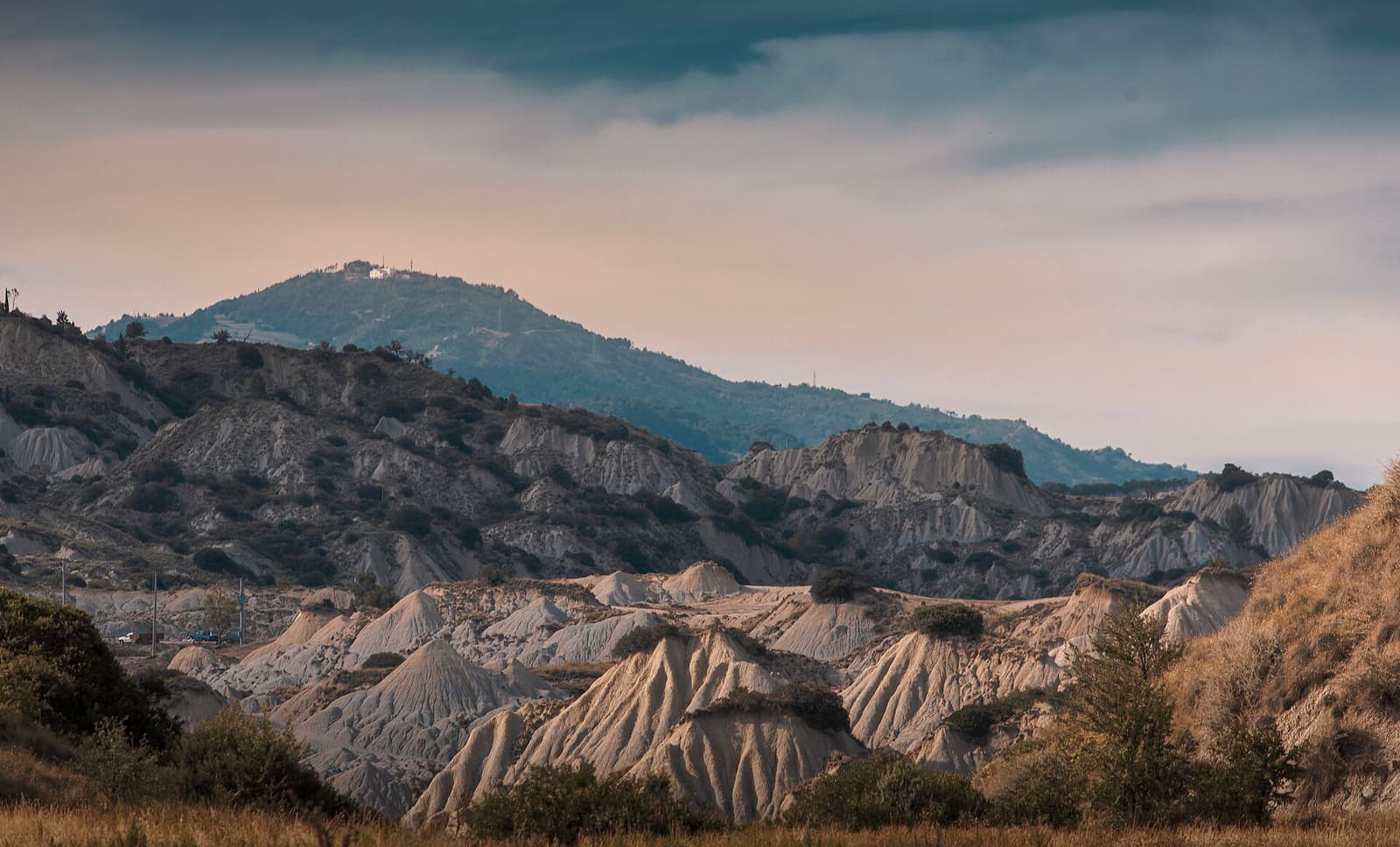
Around Aliano spread the calanchi, a lunar landscape of furrowed clay ridges. To the west, the Val d’Agri is broad and green, with the Roman town of Grumentum, the Pertusillo lake and the pilgrimage town of Viggiano, known for its tradition of harpists.
Highlights
- Carlo Levi in Aliano: his house of exile, museum and grave.
- The calanchi: clay badlands best seen at sunset.
- Sant’Arcangelo: a hill town with the convent of Orsoleo.
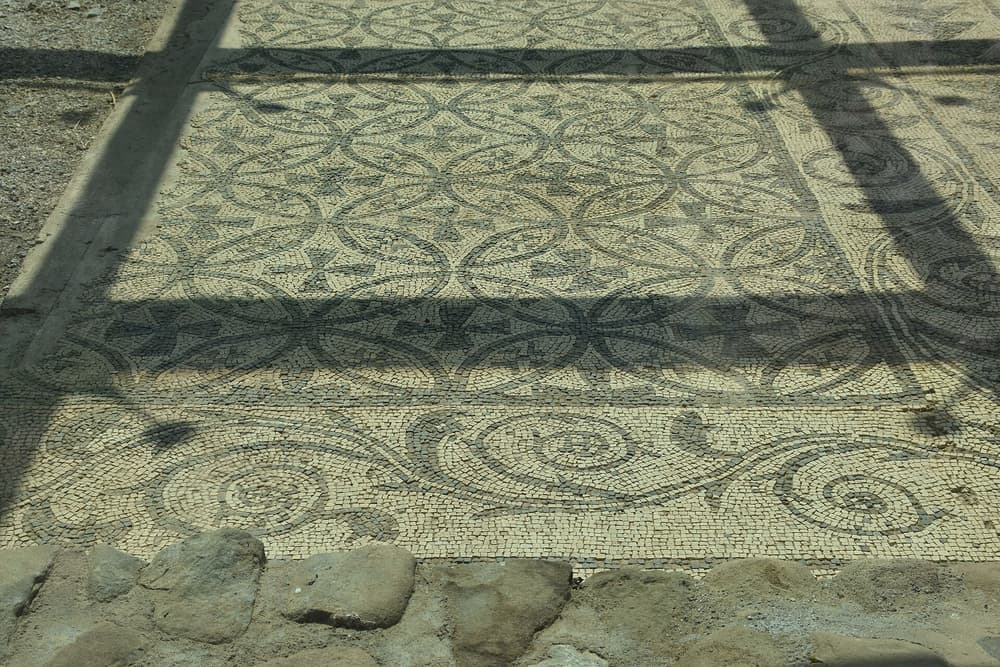
- Grumentum: theatre, forum and mosaics of a Roman town.
- Pertusillo lake: a reservoir among the mountains.
- Viggiano: the Black Madonna and the harp tradition.
Quick facts
| Province | Matera (Aliano) and Potenza (Val d’Agri) |
|---|---|
| Literary link | Carlo Levi, “Christ Stopped at Eboli” |
| From Matera | About 1.25–1.5 hours by car |
| Ideal stay | One or two nights |
| Best for | Literature, landscapes, off-the-beaten-path travel |
| Getting around | Car only |
How long to stay & where to base yourself
One night in Aliano lets you see the badlands at sunset and dawn. Add a second night for the Val d’Agri. Accommodation is limited and simple, so book ahead, especially in summer.