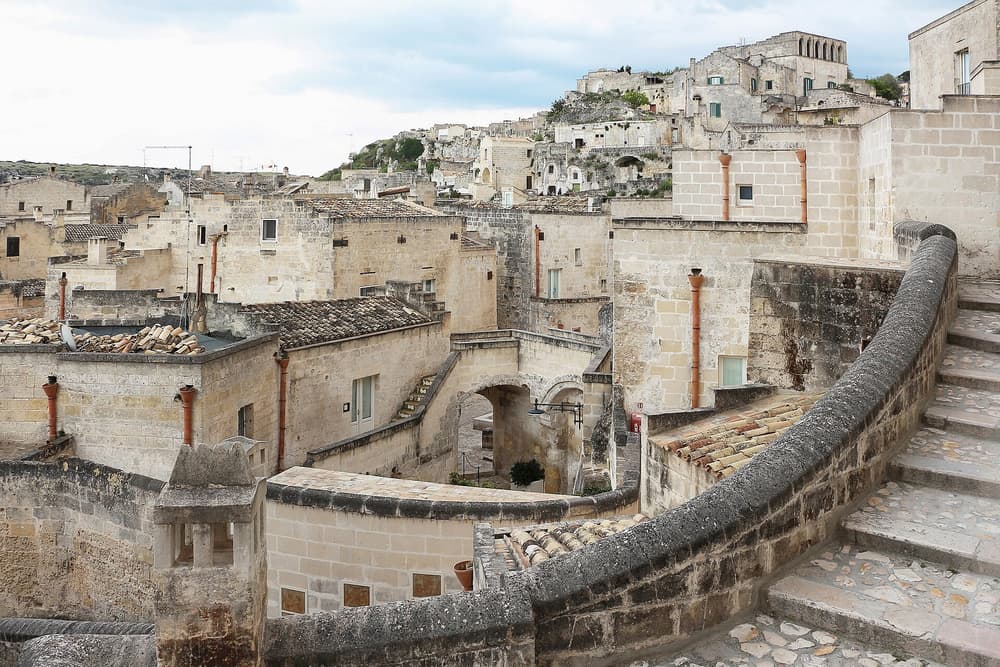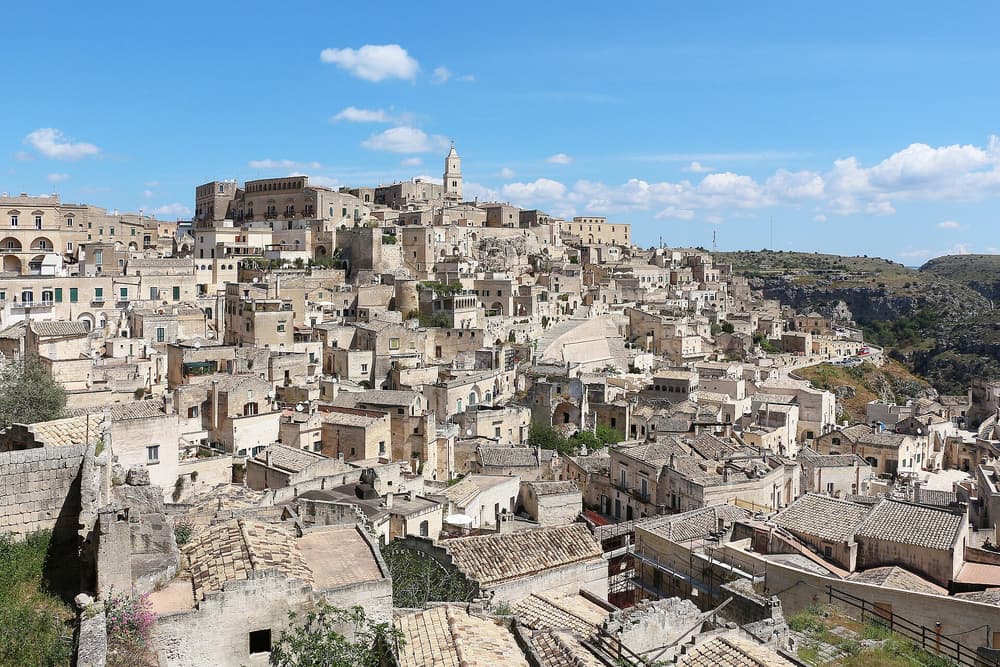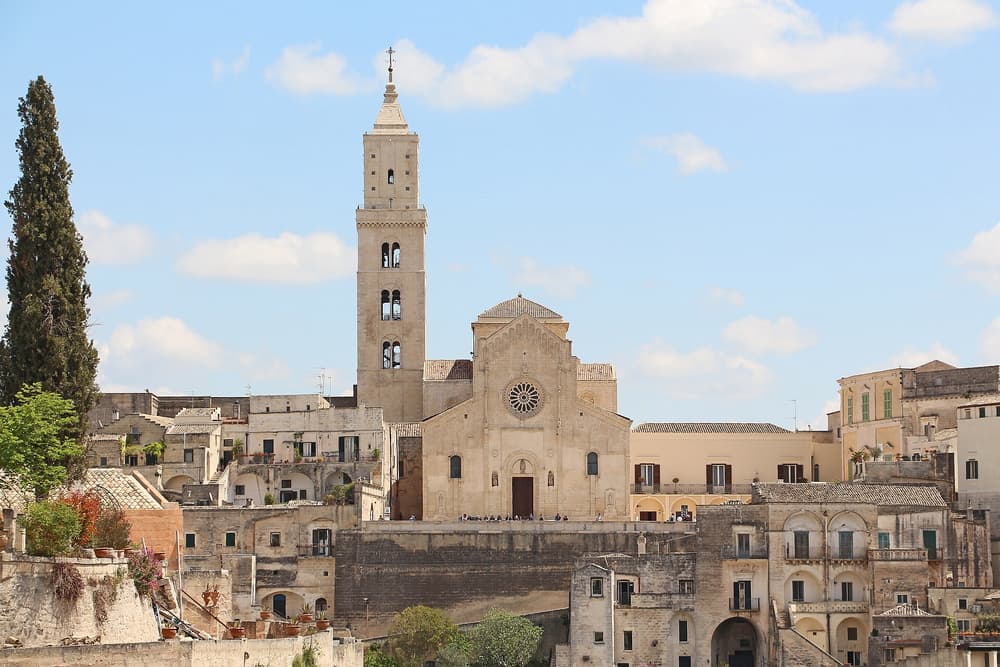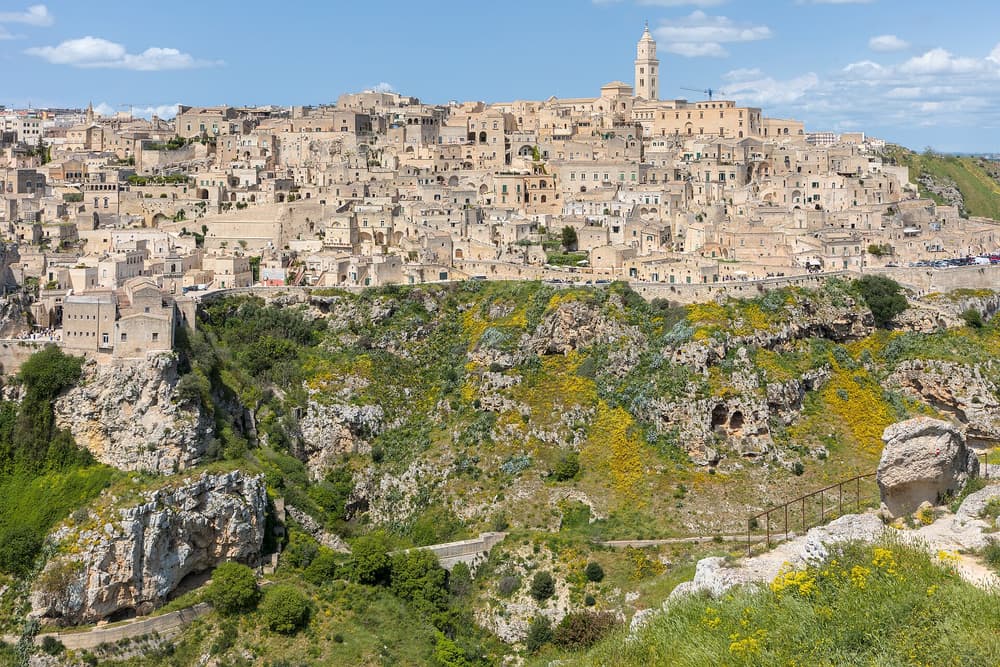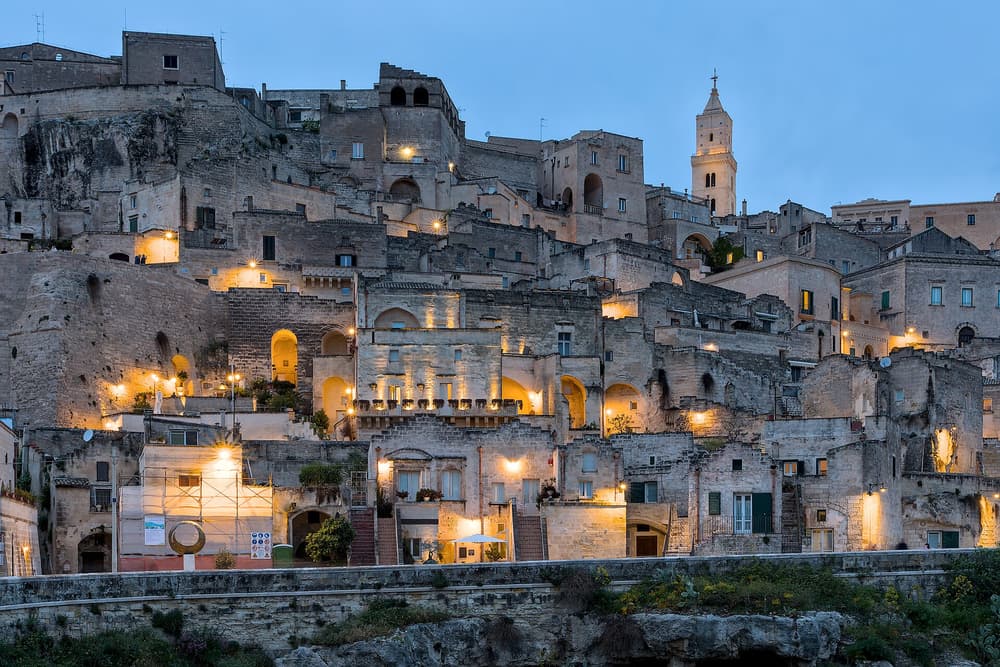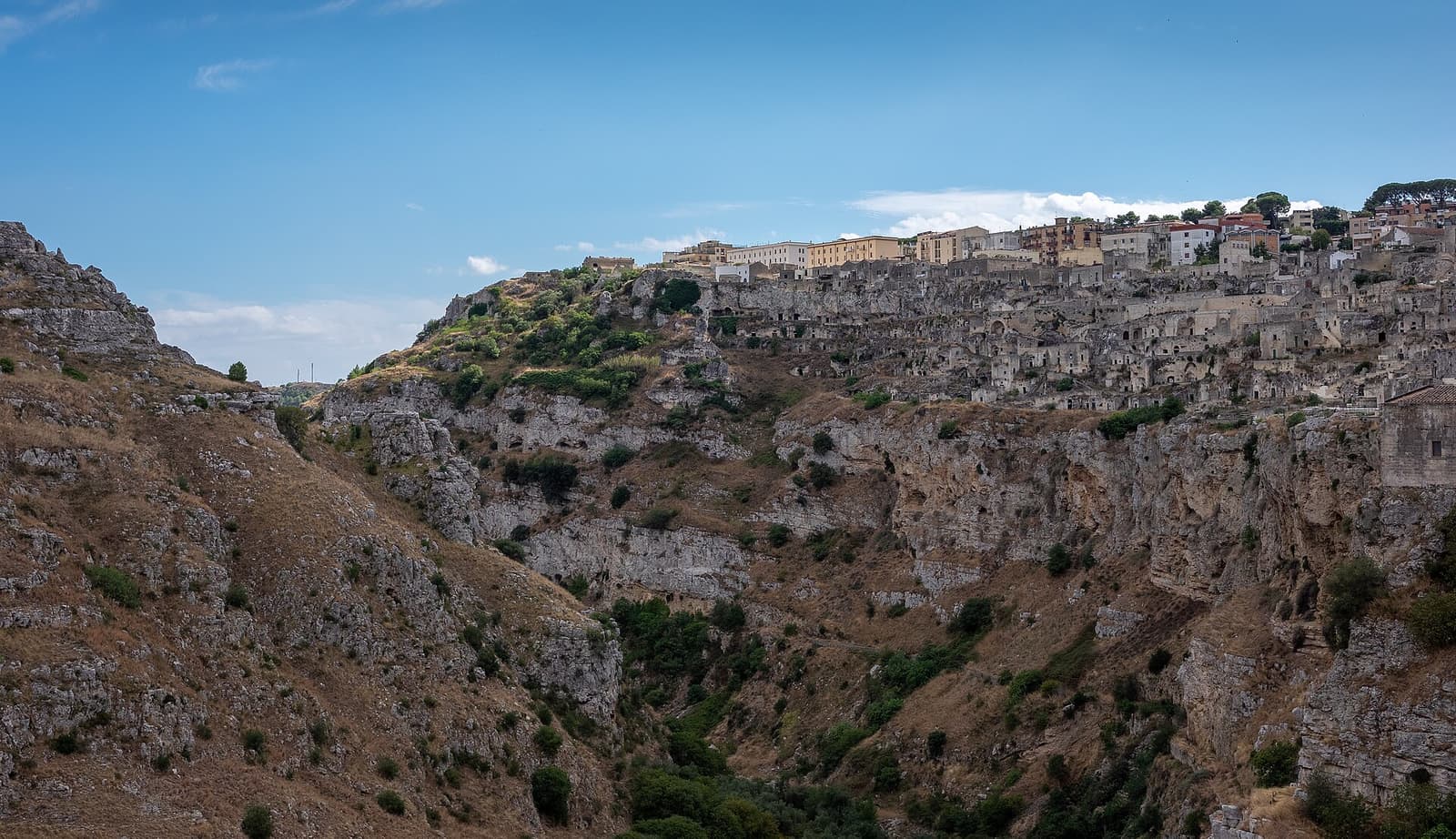
Matera is the reason most people first hear of Basilicata. Its two old districts, the Sasso Caveoso and the Sasso Barisano, climb the side of a ravine called the Gravina, with houses, churches and cisterns dug into the soft limestone. People have lived in caves here for thousands of years, which is why the Sassi are often described as one of the oldest continuously inhabited places in the world.
In the 1950s the Sassi were evacuated after Carlo Levi’s book Christ Stopped at Eboli drew national attention to the poverty there. Decades of restoration followed. Today the caves hold hotels, restaurants and museums, and the city has appeared in films from Pasolini’s The Gospel According to St Matthew to The Passion of the Christ and the James Bond film No Time to Die. Across the ravine, the Murgia Materana park protects dozens of rock-cut churches.
Highlights
- The Sassi: two cave districts of stairways, rooftops and lanes.
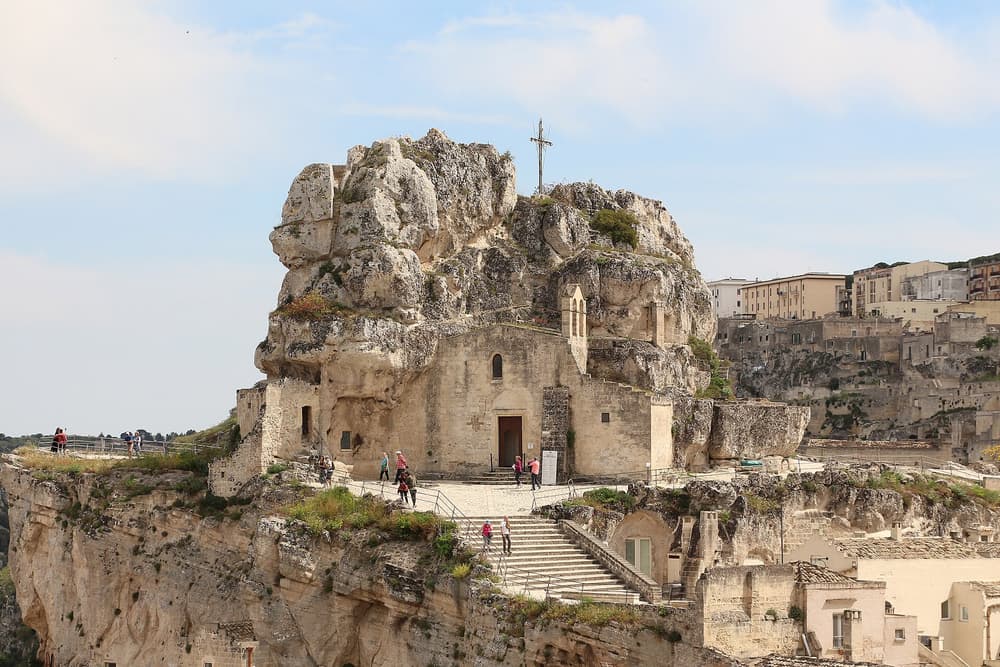
- Rock churches: frescoed chapels cut into the limestone, in town and in the Murgia.
- Palombaro Lungo: a vast underground cistern below the main square.
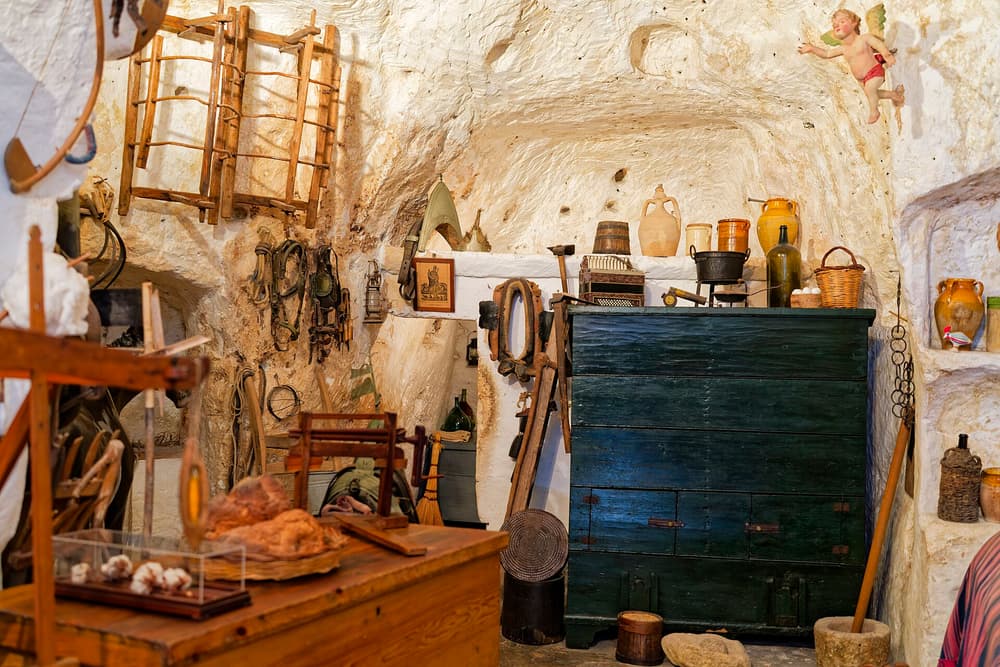
- Casa Grotta: a cave home furnished as it was before the evacuation.
- Murgia Timone: the classic view of the city from across the ravine.
- Food: Matera bread, peperoni cruschi and Aglianico wine.
Quick facts
| Province | Matera, eastern Basilicata |
|---|---|
| Currency | Euro (EUR) |
| From Bari | About 1 hour by car, 1.5 hours by train |
| Ideal stay | Two nights |
| Best for | History, photography, cave hotels |
| Getting around | On foot (many steps); no cars in most of the Sassi |
How long to stay & where to base yourself
Plan on two nights: one full day for the Sassi and churches, and a morning or sunset for the Murgia. Sleeping in the Sassi is the experience most visitors remember, but expect steps with luggage. The newer town around Piazza Vittorio Veneto is flatter and easier with a car.